Rates Just Hit Their 2026 High. Here's the Whole Messy Story.

Just a quick reminder: these articles are researched and written by me. My goal is to help you cut through the noise -- beyond the headlines and soundbites.
This morning, mortgage rates hit their highest level of 2026 -- 6.85%. It's the first time all year that rates are sitting above where they were on the same day last year.
How we got here is a story with three acts. And if you've been trying to follow it through the headlines -- ceasefire on, ceasefire off, victory declared, victory un-declared -- I don't blame you for being lost. Let's walk through it.
A story in three acts
Act one -- spring. The conflict sent oil from $71 to $115 a barrel. Inflation picked up. Mortgage rates climbed from under 6% to the high 6s. Simple enough.
Act two -- early summer. The fighting cooled. Oil fell all the way back below $70 -- the entire war premium, gone. And rates? They barely moved. Because during those months of $100 oil, the Federal Reserve got spooked and flipped from planning rate cuts to openly talking about rate hikes. As Logan Mohtashami at HousingWire put it, the hawks took over -- and the bond market prices off what the Fed says it'll do next, not what oil did last week.
Act three -- right now. The conflict reignited. Thirteen straight days of bombing. Houthi attacks on oil tankers in the Red Sea. Oil is back over $90, the 10-year Treasury just hit its 2026 high, and markets are now pricing a 36% chance the Fed raises rates at its July 28-29 meeting -- decision lands Wednesday the 29th at 2pm. Not cuts. A hike.
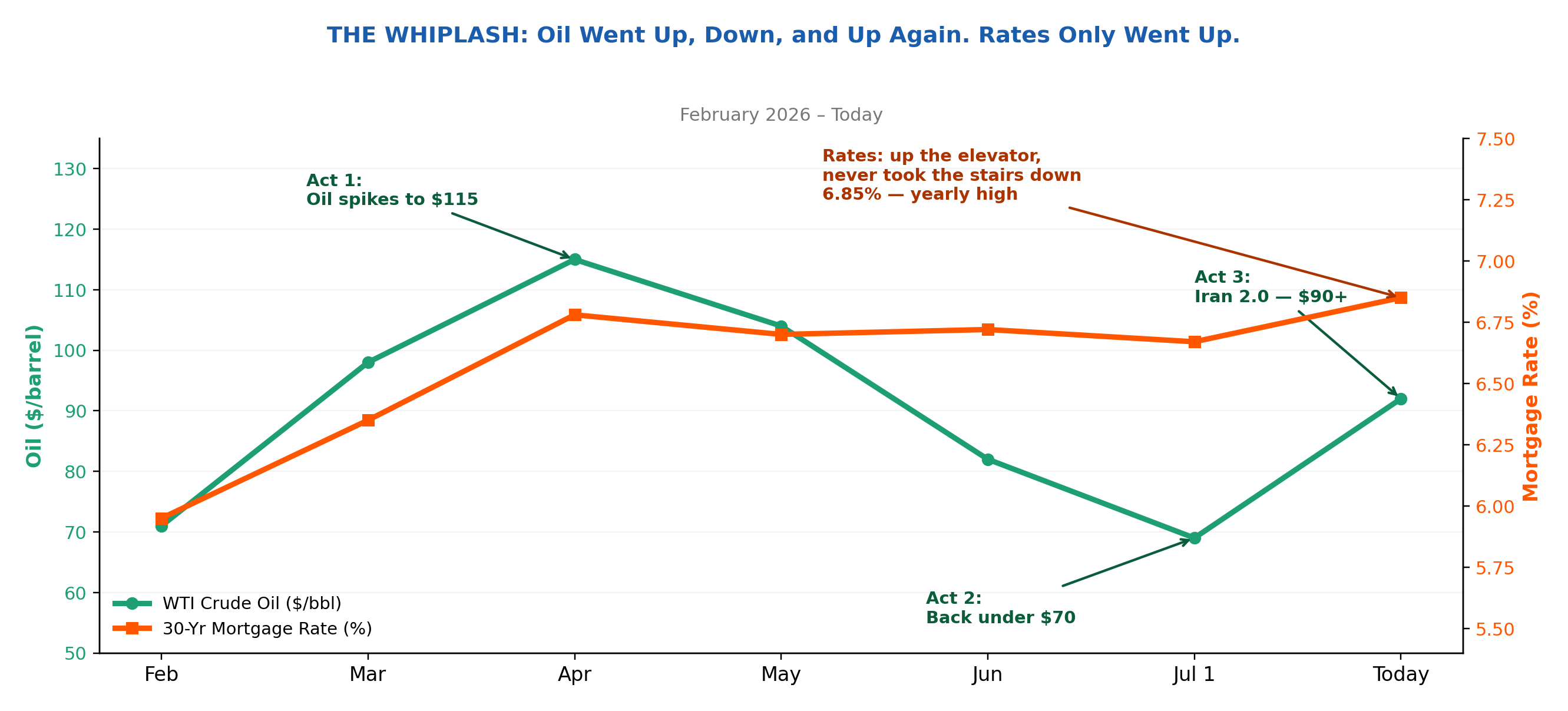
Notice the pattern in that chart. Oil rides a rollercoaster -- rates ride a ratchet. They click up on bad news and just... hold. Even June's cooler-than-expected inflation report barely moved them. When headlines can push rates up but good data can't pull them down, that tells you how nervous this market is.
One piece of perspective from Mohtashami worth holding onto: even in his worst-case escalation math, rates top out around 7.25% -- not the 8% we saw in 2023. Elevated, yes. Runaway, no.
Why 6.64% is the number I'm watching
Mohtashami has tracked this for years: housing demand does noticeably better when rates are under 6.64%, and starts to fade when they sit above it for a while. Guess where we just landed? Rates crossed above that line this month, and the first data is in -- purchase applications fell 7% for the week and went slightly negative versus last year for only the third time in 2026.
One week doesn't make a trend. But duration matters. The longer rates camp out above that level, the more buyers step back.
And yet -- buyers haven't quit
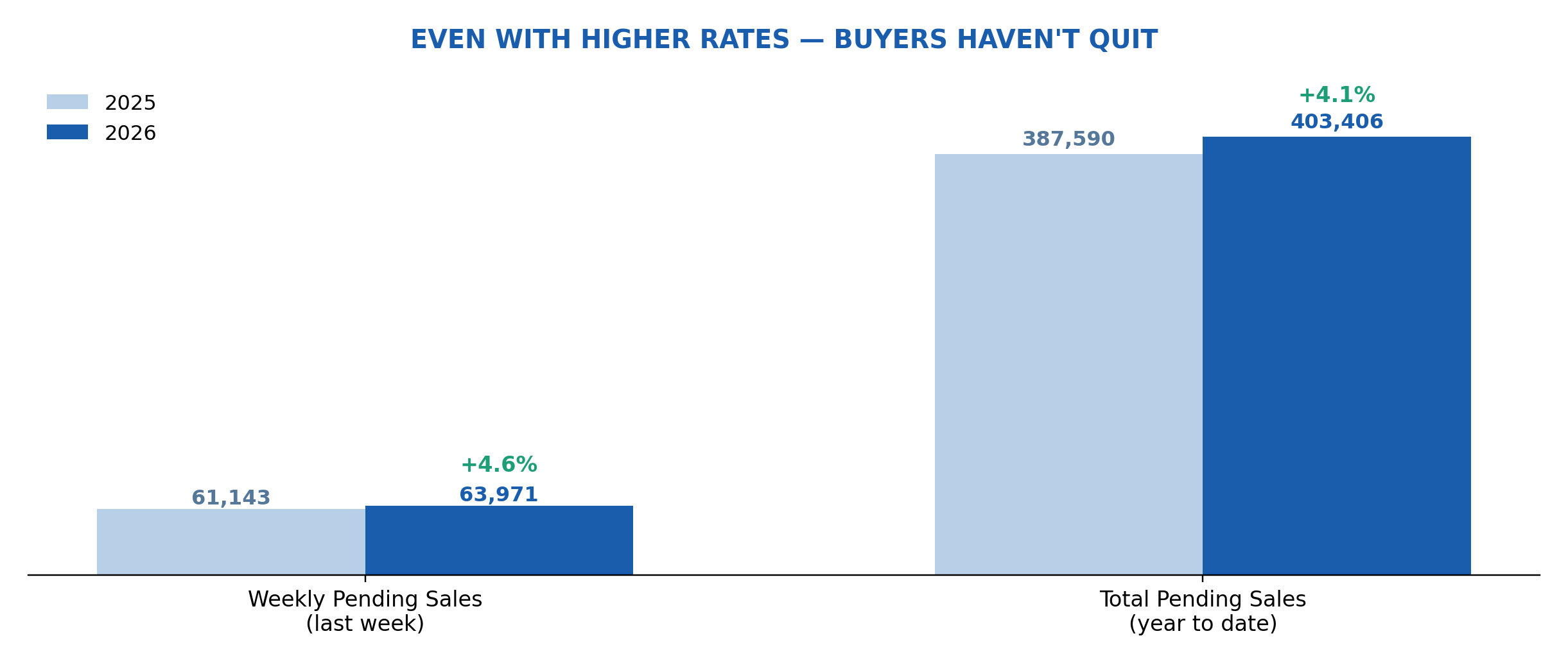
Here's what surprises people. Even with all the noise this year, pending home sales are still running ahead of last year. More homes are going under contract in 2026 than did in 2025.
Part of the reason: supply and demand have found a better balance. Lance Lambert's team at ResiClub reports that national inventory growth has slowed to a crawl -- up just 1.9% from a year ago, compared to nearly 29% growth the year before. Sellers aren't flooding the market, buyers are still showing up, and prices in most areas are holding steady.
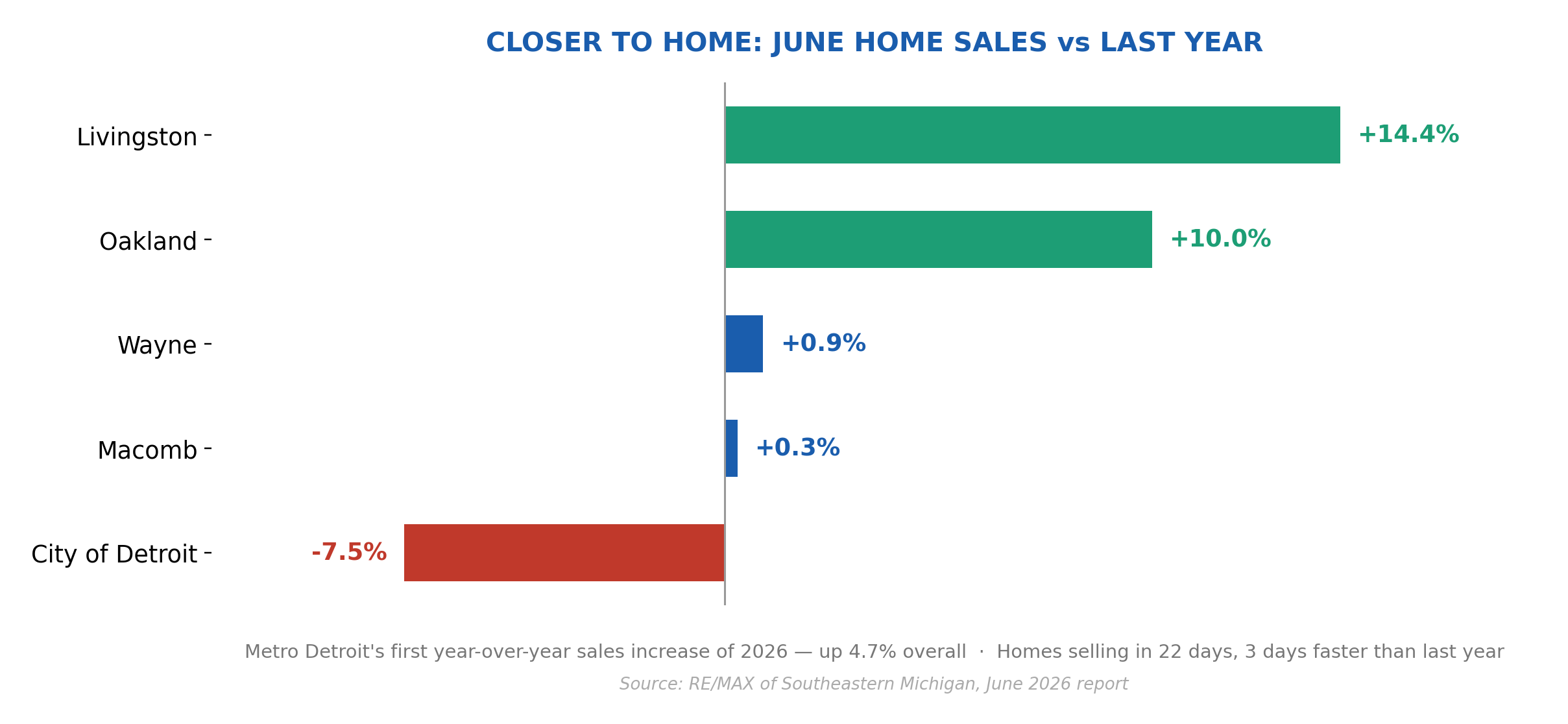
And closer to home? Metro Detroit just posted its first year-over-year sales increase of 2026 -- up 4.7% in June. Oakland County led the pack among the big three counties, up a full 10%. Homes here are selling in an average of 22 days, three days faster than last year. Whatever hesitation the national headlines suggest, buyers in our backyard didn't get the memo.
What does this mean for you?
- Circle Wednesday, July 29 on your calendar. The Fed's decision drops at 2pm that day, and for the first time in years there's real hike risk on the table. Whatever they say -- and how they say it -- will move rates more than any single headline from the Middle East.
- If you're waiting for the war to end so rates will drop: we already ran that experiment in June. Oil collapsed, and rates barely moved. Peace helps -- but the Fed holds the wheel now.
- If you're buying this year: you're competing with fewer buyers than the headlines suggest, in a market where inventory has stopped ballooning. Volatile weeks like this one scare casual shoppers off -- which is exactly when prepared buyers find their negotiating room.
- If you're holding out for the 5s: it would take a real economic slowdown or a full Fed reversal to get there. Possible? Sure. Something to build your plans around? I wouldn't.
The bottom line: rates are at their 2026 high, the conflict is driving the day-to-day, and the Fed decides next week whether to pour gas on it or calm it down. Bad news can still push rates higher from here -- but good news works too, and there's a lot of room for good news.
If you want to talk through what this means for your own purchase or refinance timeline, reach out. That's what I'm here for.
Call or text me anytime at (248) 956-0445.